

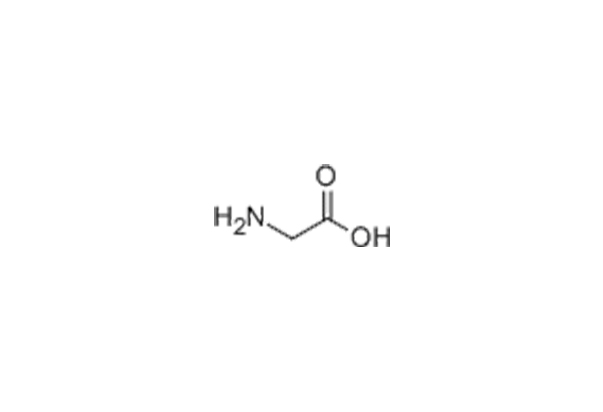
Cas N0. :56-40-6 Molecular formula : C2H5NO2
Glycine (abbreviated Gly), also known as glycine, is a non-essential amino acid with the chemical formula C2H5NO2. Glycine is the constituent amino acid of the endogenous antioxidant reduced glutathione, and it is often supplemented by exogenous sources when the body is under severe stress, and is sometimes called semi-essential amino acid.
Solid glycine is white to off-white crystalline powder, odorless and non-toxic. Soluble in water, almost insoluble in ethanol or ether. It is used in the pharmaceutical industry, biochemical tests and organic synthesis. It is an amino acid with the simplest structure in the amino acid series and is not essential for the human body. It has both acidic and basic functional groups in the molecule. It can be ionized in water and has strong hydrophilicity. , but it is a non-polar amino acid, soluble in polar solvents, but insoluble in non-polar solvents, and has a high boiling point and melting point. The adjustment of the acidity and alkalinity of the aqueous solution can make glycine show different molecular forms.
 Contact us

Ningbo long Time Chemistry Co., Ltd. is a company mainly engaged in chemical trade, and closely cooperates with domestic R & D companies to develop and produce characteristic intermediates
Copyright 2022 Ningbo long Time Chemistry Co., Ltd. 浙ICP备2022010264号


