


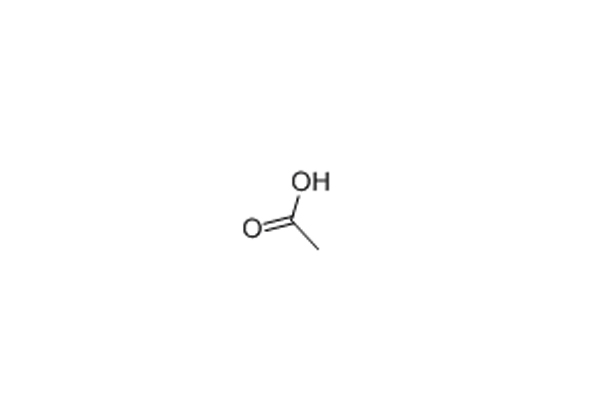
Cas N0. :64-19-7 Molecular formula :C2H4O2
Acetic acid, also known as acetic acid, glacial acetic acid, chemical formula CH3COOH, is an organic monobasic acid, the main component of vinegar. Pure anhydrous acetic acid (glacial acetic acid) is a colorless, hygroscopic solid with a freezing point of 16.6°C (62°F). After solidification, it is a colorless crystal. Its aqueous solution is weakly acidic and highly corrosive. The vapor is irritating to the eyes and nose. sexual effect.
 Contact us
Acetic acid is a bulk chemical product and one of the most important organic acids. Mainly used for the production of vinyl acetate, acetic anhydride, acetate and cellulose acetate. Polyvinyl acetate can be used to prepare films and adhesives, and it is also a raw material for synthetic fiber vinylon. Cellulose acetate can be used to make rayon and motion picture film. Acetate is an excellent solvent and is widely used in the paint industry. Acetic acid can also be used to synthesize acetic anhydride, diethyl malonate, ethyl acetoacetate, haloacetic acid, etc., and can also be used to manufacture drugs such as aspirin, and can also be used to produce acetate, etc. It is widely used in pesticides, medicines and dyes, photographic pharmaceutical manufacturing, fabric printing and dyeing and rubber industries.
In the food industry, acetic acid is used as an acidulant, flavoring agent and fragrance. When making vinegar, the vinegar is obtained by diluting acetic acid with water to a concentration of 4 to 5%, and adding various flavoring agents. As a sour agent, when used properly diluted, it can be used to adjust beverages, canned food, etc., such as canned tomatoes, asparagus, baby food, sardines, squid, etc., can be used to make soft drinks, cold drinks, candy, baked goods, puddings, gums, condiments, etc.
Acetic acid acts as a preservative. 1.5% has obvious antibacterial effect. Within the range of 3%, the green and black color of the flesh caused by mildew can be avoided.
Store in a cool, ventilated warehouse. Keep away from fire and heat sources. In the freezing season, the storage temperature should be kept higher than 16 ℃ to prevent solidification. Keep container tightly closed. It should be stored separately from oxidants and alkalis, and should not be mixed. Use explosion-proof lighting and ventilation facilities. Prohibit the use of mechanical equipment and tools that are prone to sparks. Storage areas should be equipped with emergency release equipment and suitable containment materials

Ningbo long Time Chemistry Co., Ltd. is a company mainly engaged in chemical trade, and closely cooperates with domestic R & D companies to develop and produce characteristic intermediates
Copyright 2022 Ningbo long Time Chemistry Co., Ltd. 浙ICP备2022010264号


